Are business cards still worth it in 2026? Paper vs digital vs AR
Most cards end up in a drawer, yet people still ask for them. An honest look at when paper wins, where digital cards fall short, and what a business card should do today.
Insight5 min read
Key takeaways
- Yes, business cards are still worth it for anyone who meets people in person: at events, in sales, in many cultures.
- Paper's weakness is not the paper. It's what happens next: cards get lost, go out of date, and you never know if they were used.
- Digital cards fix updates and sharing, but they are easy to forget and rely on the other person to act.
- A printed card with a QR code that opens a live contact page, a video or an AR hologram gets the best of both.
- Measure it. Scans and saved contacts show which events and which cards actually work.
In this article
The short answer
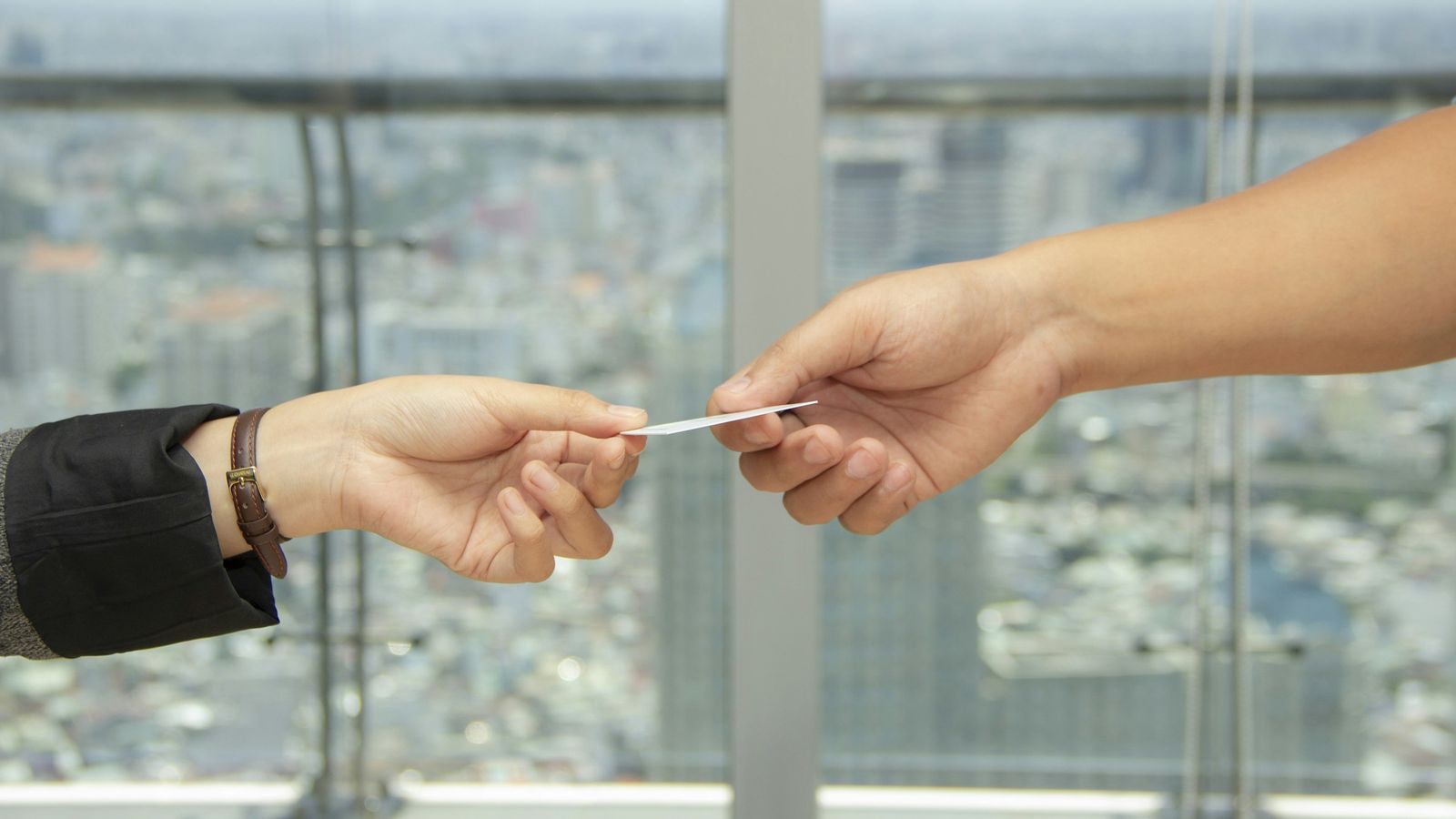
Yes. If you meet people face to face, a business card is still one of the cheapest, fastest ways to make sure they can find you again. Handing someone a card is a small ritual. It says "I'd like to stay in touch", and it does so without either of you unlocking a phone.
But the question people are really asking is a different one: is a plain paper card still enough? That answer is less comfortable. A card does its job for about ten seconds, and then it disappears into a pocket, a drawer or a bin. The good news is that this is fixable.
Where paper still wins
- It's instant. No app, no Bluetooth, no "what's your number again". You hand it over and you're done.
- It's physical. A card you can hold, with a nice weight and finish, is remembered better than one more contact in a phone.
- It's polite. In many places it's simply expected. In Japan, exchanging business cards, or meishi, is a ritual with its own etiquette: you offer the card with both hands and take a moment to read the one you receive. (Yes, that's where our name comes from.)
- It works where phones don't. Trade show halls with no signal, a quick hello in a lift, a busy table at a dinner.
- It leaves something behind. A card on a desk keeps reminding someone you exist.

Where paper falls short
- It goes out of date. A new phone number, a new title, a new company, and the whole box is wrong.
- It gets lost. Most cards are never entered into a phone. The person meant to, and then didn't.
- It's mute. A card can't show your work, your voice or your face.
- It's a black box. You hand out 200 cards at a trade show and have no idea whether a single one was looked at.
- Reprints cost money and paper. Every small change means a new batch.
Digital business cards: better, but not perfect
Digital cards, shared by QR code, NFC tap or a link, solve the update problem. You change a detail once and everyone sees the new version. Many show who opened them.
They have their own weak spots, though:
- They need a phone moment. Both people have to get their phones out, open the right app or camera, and wait.
- They're easy to forget. A link in a chat thread is not as memorable as a card in your hand.
- They can feel transactional. In some settings, saying "scan my code" instead of handing over a card still feels a little cold.
The hybrid: a printed card that comes alive
The best answer today is not paper or digital. It's a good printed card that leads somewhere.
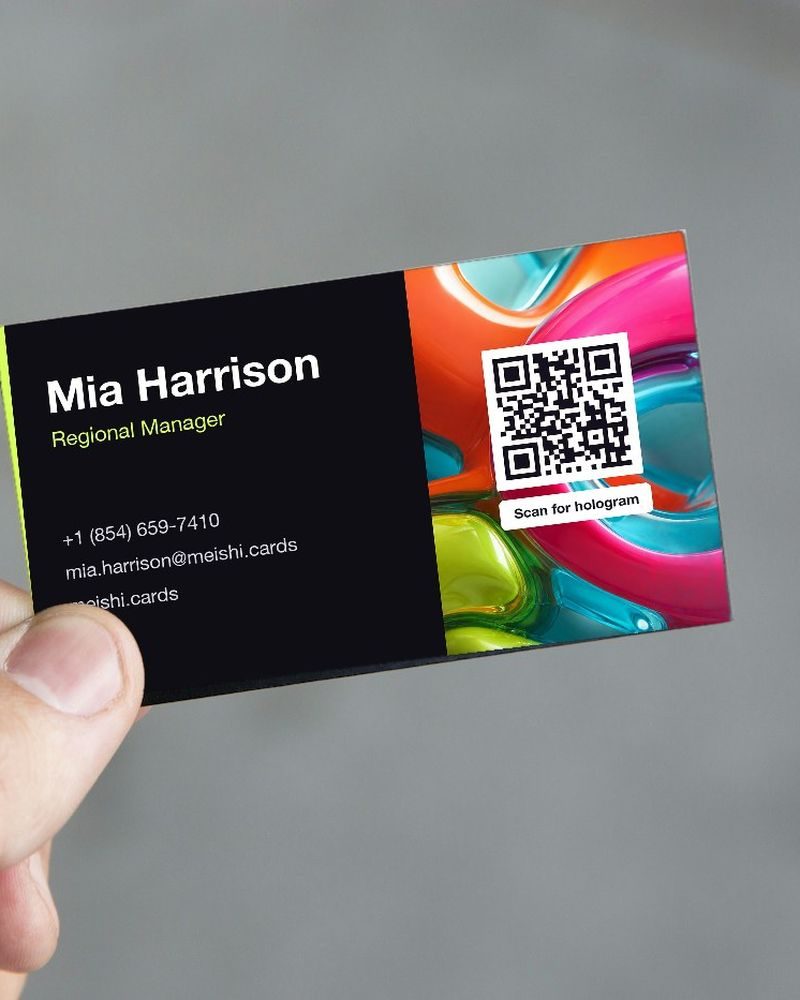
Here's how that works with an AR business card:
- You hand over a normal, well-designed printed card.
- They scan the QR code with their phone camera. No app.
- Your contact page opens with an Add to contacts button, so you're saved in their phone in one tap.
- They point the camera at the card and you appear on it as a hologram, introducing yourself in your own voice.
- If they want to, they leave their details, and you get a lead instead of a lost card.
When your number or title changes, you update the page and the hologram. The card in their drawer stays right. And because every scan is counted, you can finally see which event, which meeting and which design worked.
If that sounds interesting, here's how to make a hologram of yourself for a card, step by step.
What to put on a business card today
Less than you think. A clean card with room to breathe looks more confident than one that lists everything.
Put on:
- Your name and job title
- Your company and logo
- One phone number and one email address
- Your website
- One social profile, the one you actually use for work
- A QR code with a promise: "Scan to save my contact", "Scan to see my intro", "Scan for hologram"
Leave off:
- Fax numbers, unless your industry really still uses them
- A full postal address, unless people visit you
- Every social network you have ever joined
- Long taglines and mission statements
Design tips that help people and cameras
- Readable type. Nothing smaller than about 7 to 8 points for details, more for your name.
- Contrast. Dark text on a light card or the other way round. Grey on grey looks elegant in the file and disappears in a dim room.
- A QR code of at least 2 cm, with a clear margin around it, away from folds and edges.
- Some detail on the card if you use AR. The AR camera recognises a card by its texture, so a photo, a pattern or an illustration works far better than a large empty area.
- Standard size. About 85 × 55 mm in most of Europe, 3.5 × 2 inches in the US and 91 × 55 mm in Japan. Odd sizes don't fit in card holders and wallets.
How to tell whether your cards work
With a plain paper card, you can't. With a card that leads to a live page, you can see:
- Scans per day, so you know which event or meeting created interest
- Where scans came from, by country
- Saved contacts and taps on your links
- Leads: people who left their own details
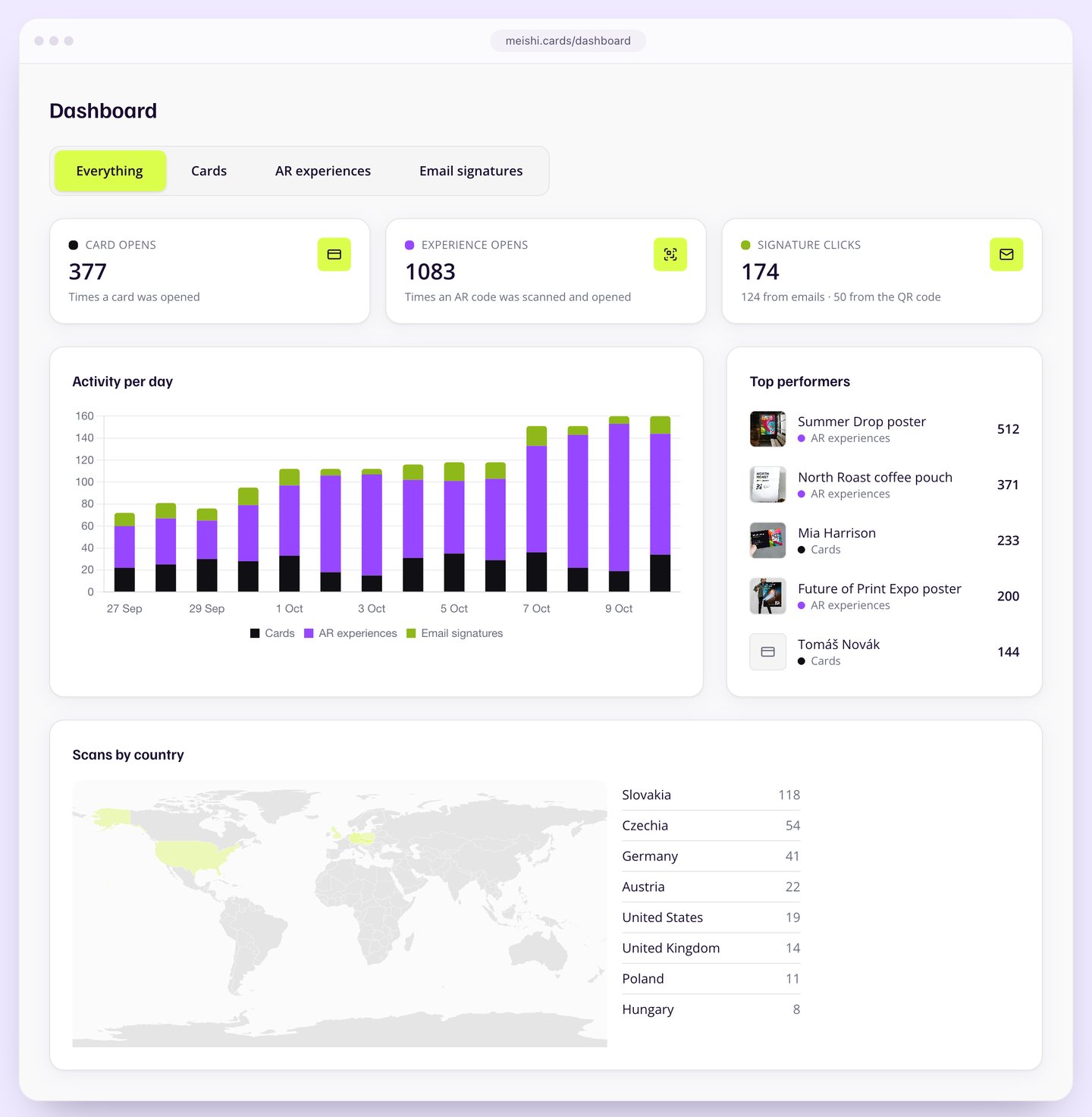
That turns a box of cards from a cost into something you can learn from. If one design gets twice the scans, print that one.
So, should you still print business cards?
Yes, if you go to events, meet clients in person, work in sales, real estate, hospitality, creative services, or do business in places where cards are expected.
You can skip them if almost all of your work happens online and you rarely meet new people face to face. A digital card and a good email signature will do.
Either way, don't print a card that ends the conversation. Print one that starts it.
Frequently asked questions
Do people still use business cards in 2026?
Yes. Cards are still exchanged at events, in sales and client meetings, and they are part of business etiquette in many countries, Japan most famously. What has changed is that more cards now carry a QR code that leads to a live, up-to-date page.
Are digital business cards better than paper ones?
They are better at staying up to date and at showing who opened them. Paper is better at being instant, memorable and polite. A printed card with a QR code that opens a digital card combines both.
What is an AR business card?
A printed card with a QR code. Scanning it opens a contact page in the browser, and pointing the phone at the card shows a video of the owner standing on it as a hologram. No app is needed.
What should I put on a business card?
Your name, job title, company and logo, one phone number, one email, your website, one work-related social profile and a QR code with a clear promise. Leave out fax numbers, long taglines and every social network you have.
What size is a standard business card?
About 85 × 55 mm in most of Europe, 3.5 × 2 inches (89 × 51 mm) in the US and 91 × 55 mm in Japan.
How many business cards should I print?
For most people 50 to 100 is plenty, more before a big trade show. If your card links to a page you can update, you won't have to throw the rest away when your details change.